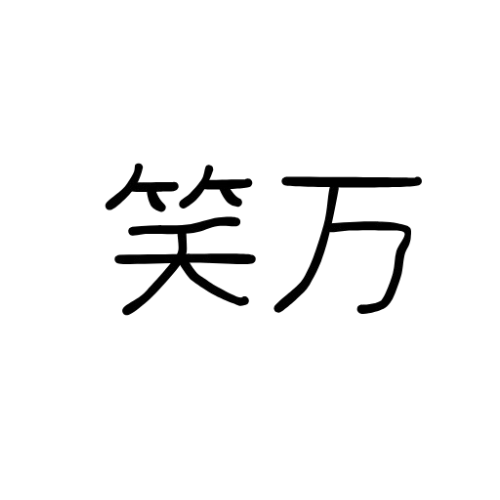
“Besto o tsukusu yo no, gambatteimasu.”
Tokiko Takahashi Kumano, 2024
To use up my best, I will keep going.
Tokiko’s Story
Direct link to StoryMap: Tokiko Takahashi Kumano
Reflection
Obaachan is always busy.
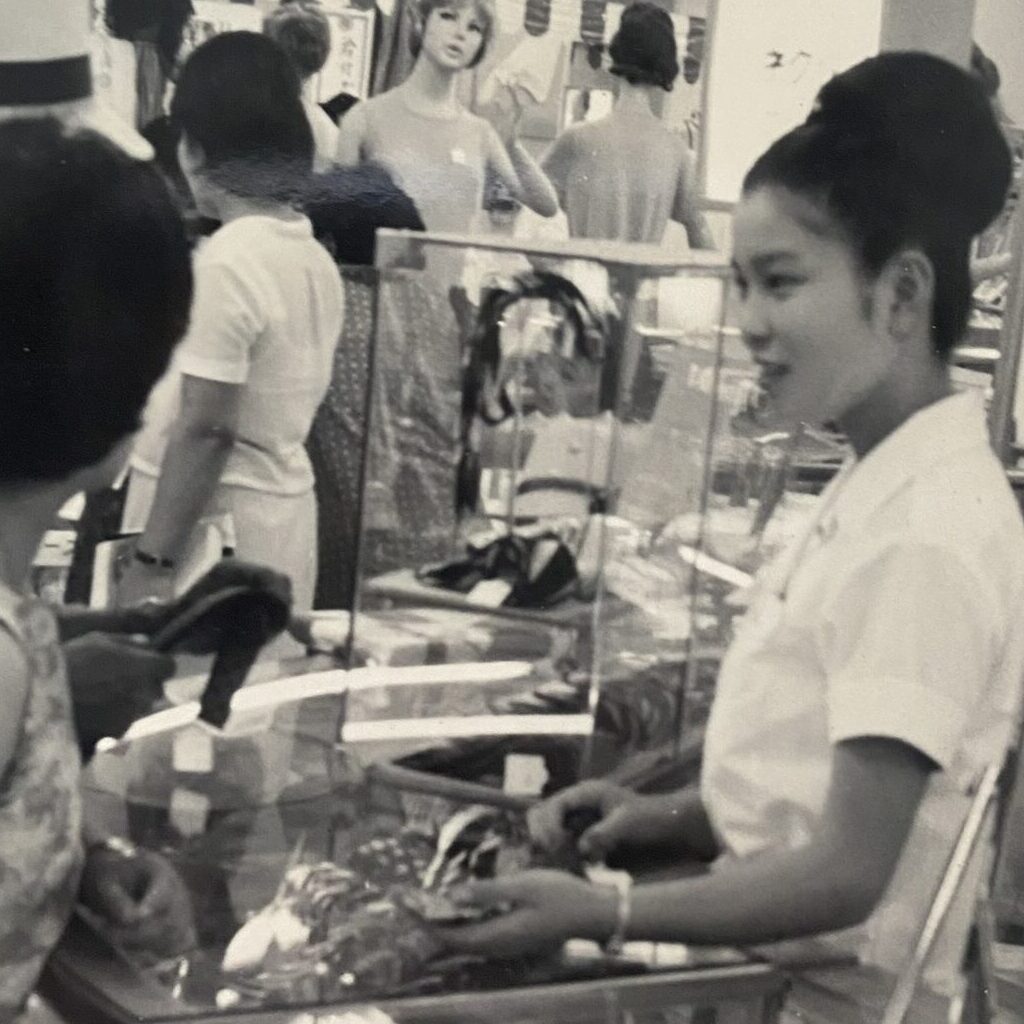
During our childhood summers, my sisters and I would travel from Pennsylvania to Hawaii, flying across the continent and the Pacific. Once settled, we would inevitably visit Obaachan at her job in Ala Moana’s Duty Free. She would let us come behind the watch counter of Cartier and introduce us to her customers. “My granddaughters,” she’d proudly say, “visiting from the mainland.” We would introduce ourselves in Japanese, and the customers would all be impressed, “Wow! They speak good Japanese.”
After her shifts, she would come home and greet us, where we would be lounging around the cramped living room. A bookshelf separated the kitchenette from the living room, and she would disappear behind it to prepare dinner. Within an hour, there would be a perfectly grilled fish and steaming bowls of rice neatly arranged on the tiny table.
While we ate, Obaachan would choro choro around the kitchen, cleaning this and that, bringing out a side dish or two. Always checking that we had all the food we wanted. Always adding an extra condiment to the table. Always in motion.
To this day, I have never seen Obaachan sit through an entire meal without disappearing to the kitchen at some point. It is not for lack of trying–my Mother, Naomi, is set on keeping Obaachan sitting. “Mom!” She’ll say, “Sit down!”
When she wasn’t at work, Obaachan would disappear off to an exercise class or to her garden. Her pace is brisk, and as a child, I struggled to keep up.
Ten years have passed since Obaachan retired, and she is still busy. It was an effort to plan our interview together; Obaachan needed to take my Grandfather, Ojiichan, to his exercise class. Then, she needed to do groceries. Then, she needed to walk the dog. Then, she needed to look over mail with the aid of my Mother. Then, then, then.
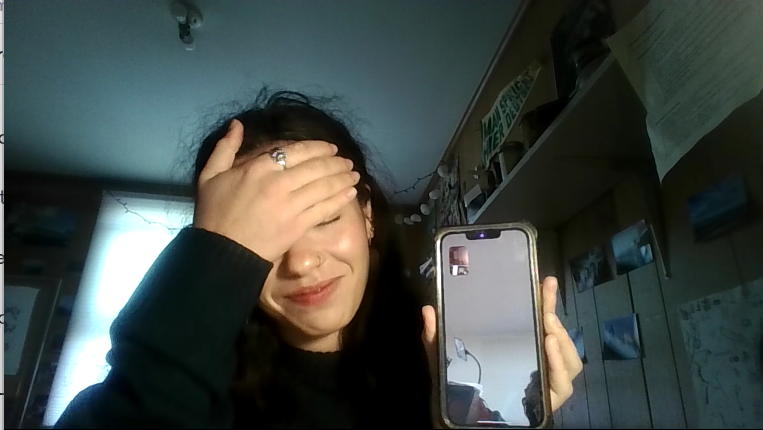
Our interview begins with technical difficulties. Obaachan doesn’t know how to open ZOOM, and we go back and forth trying to figure out how to open my emailed link on her phone. It doesn’t work. Eventually, I simply video call her on my phone and record our conversation on my laptop camera.
Interview Analysis
But you cannot simply just tell someone who has been traumatized by capitalism since birth to consistently lay down and rest without addressing the reality of our brainwashing. When we finally wake up to the truth of what a machine-level pace of labor has done to our physical bodies, self-esteem, and our Spirits, the unraveling begins.
Tricia Hersey, 2023: 19-20.
Tokiko Takahashi Kumano was born one month after the end of WWII. Sendai was bombed towards the end of the war as part of a strategic plan against the civilian population of Japan by the United States. Of her post-war upbringing, she simply says, “an American GI gave me cheese. I thought it was soap, it was so strange.”
Tokiko grew up as the youngest daughter of five siblings.
“I was an idiot!” She tells me, “I was always playing, and I hated school.” Academic achievement is a point of contention of Tokiko; once, a boyfriend dumped her because his mother said her handwriting was poor. “You can tell a lot of about a person from their handwriting,” she said, “She had a good point.”
She met this ex-boyfriend at her first official job, as a saleswoman for Mitsukoshi, a high-end department store. Before then, she worked as a waitress at a soba restaurant.
She tells me, ” It’s funny, my first proper job was as a tie saleswoman. But before then, in High School, I worked at a soba restaurant as a waitress. And in Japan, there isn’t really tips, so I’d only make like $2 a day. So by 15 days, I could make about $30. And after High School, I went to work at Mitsukoshi.”
After thinking to herself, she reflects, ” All my jobs are to service other people, huh. It’s to talk to people and make them feel good. You don’t just go, “Here.”. You go, “Oh how was it? Here are the specials.”. And when a cute girl tells you that, it feels even better, right? So I was always a charming girl.”
Tokiko concludes, “Waitressing and Sales are both about making people feel good, from start to finish. Customers and the people around me.”
“Surface and deep acting in a commercial setting, unlike acting in a dramatic, private, or therapeutic context, make one’s face and one’s feeling take on properties of a resource. But it is not a resource to be used for the purposes of art, as in drama, or for the purposes of self-discovery, as in therapy, or the pursuit of personal fulfillment, as in everyday life. It is a resource to be used to make money.”
Arlie Hochschild, 1983: 55
Money is undoubtably a motivation of Tokiko’s. When I asked her how she stayed motivated when she took on multiple jobs while raising her children, she laughed, “Motivation? I didn’t have time to think of that. Just, every day I had to do everything properly. Make sure the rent is paid, make sure the family is healthy. I did it because I had to.”
Tokiko’s drive and her service career is not a regret, but a point of pride. “My ikigai is to use up my best, and to do that, gambatteimasu.” Ganbatte is a word that translates to “keep going”, “to fight”, or “go on”. It is a word used to cheer people on, to motivate them. Tokiko uses it to decribe how she will keep trying to use up her best.
When combined with poverty and grind-culture, Tokiko’s ikigai translates to a terrifying corporate work ethic. It was a necessity to work, and for a woman set on performing her best, the grind is an excellent metric of ‘best’.
Hypercompetitive, Tokiko tells me how she viewed work at Duty Free, “So back then, I’d do jobs that would make the customer happy, the boss happy, the company happy. I’d think, who is at the top? I’d think of the top salespeople. And I’d make sure I was the top salesperson. And because I know how to speak proper Japanese, I’d work with my customers who were 90% Japanese.”
To assess the feelings of others and act accordingly is wisdom Tokiko bestows to me, “It is important to read other people. See what kind of person they are. At one glance, you’ll know. I’ve met so many people, I know how they will move. When you meet someone, read them.”
She emphasizes the importance of curating emotional positivity for others through oneself, “If you are a good-feeling person, then the people around you will match it. It takes some energy to do, but it gives me more energy. I only really felt the exhaustion after I retired.”
This unfamiliar sensation of exhaustion is striking. For someone constantly working, Tokiko is certain that the emotional labor fueled her. Her framing of deep acting is that of a helpful tool that makes money and brings joy. It is not an act, it is a reality.
While Tokiko poured her life into labor, however, caregiving became a shared responsibility. Tokiko’s eldest daughter, Naomi, took on motherhood roles as a Middle Schooler. As Tokiko explained her daily schedule, she mentions Naomi’s help, “I’d wake up at 4ish, I’d get everything ready for Ojiichan and the kids, go to work, go back prepare dinner, go to work, clean everything when I came home, shower think about what to make for dinner tomorrow. Go to sleep by 12, wake up 5ish and then do it all again. It was a lot, wasn’t it. But I never thought it was a lot when I was doing it. Naomi did a lot too. She’d take care of Shogo, they didn’t get along, but she’d do it. Naomi would have to go and apologize to the school for him because I din’t have time to go and she speaks English, so she’d go, take the heat, and come home. Naomi would do the mom-work. She did a good job helping. She did well.”
Though constantly in motion, Tokiko remains perceptive, “That’s why she liked Aunty Marichan. Aunty Marichan would dote on her, so would her cousins.”
Marichan was my Grandfather’s sister and Tokiko’s sister-in-law. The wife of a successful businessman, Marichan would take my mother, Naomi, on excursions. She is who Naomi tells me to take inspiration from.
Tokiko tells me that hard work is ultimately worth it, that it will let you live without regrets. “If you do your best, do everything properly, thoroughly, then you can be satisfied with yourself.”
Though Naomi may point to Marichan as a role model, her own ikigai is nearly identical to Tokiko’s.